
Storm & Hurricane Debris Removal in Winter Haven, FL
Central Florida sits in the path of hurricanes and summer storms, and cleanup afterward is a recurring reality for Winter Haven property owners. When a storm passes through, getting a container fast is the whole game - and being local is what lets us respond.
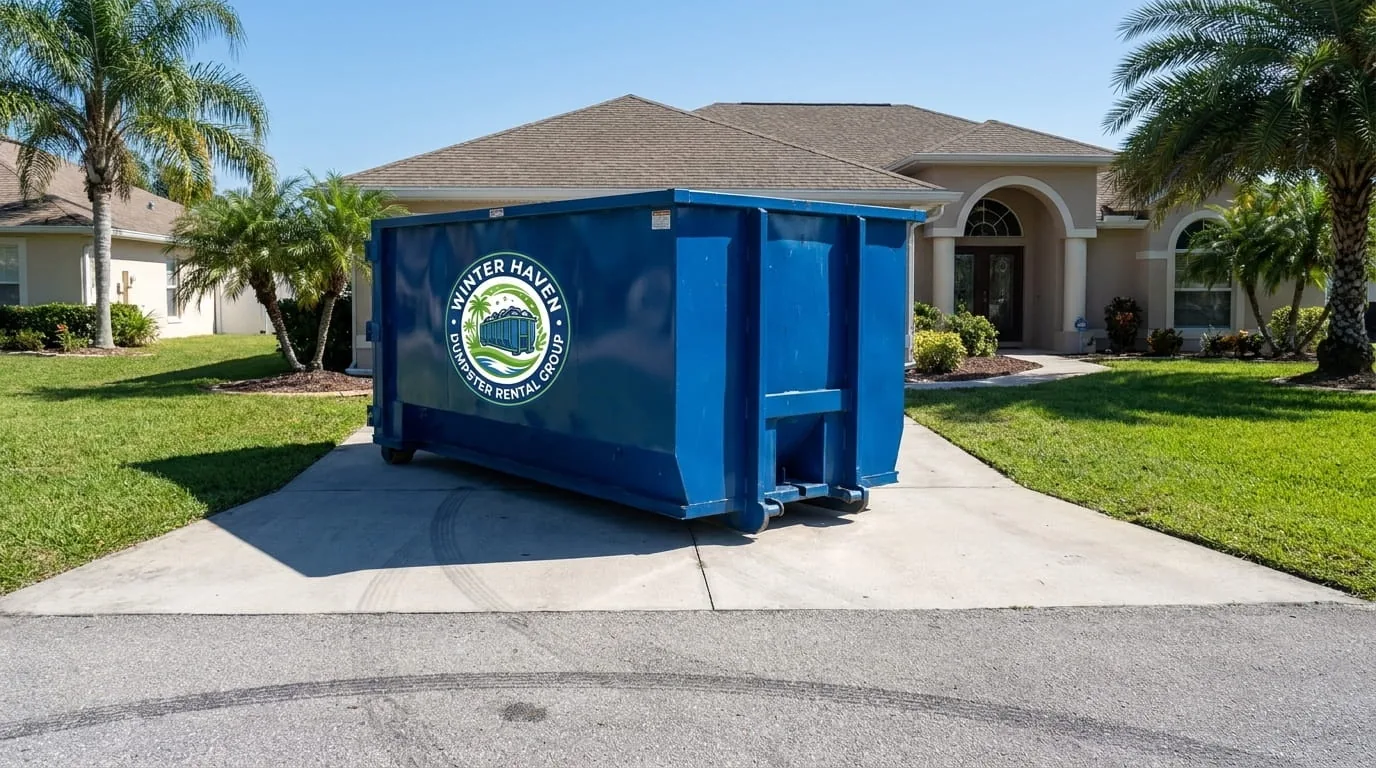
Why local response matters after a storm
After a hurricane or a bad summer storm, demand for containers spikes across the whole metro at once, and companies hauling in from outside the area simply cannot keep up. Being based right here in Winter Haven is what lets us respond quickly when it counts.
We know the neighborhoods, the lakefront streets and the routes that may be blocked or flooded, so we can reach most properties even when access is difficult. And we know the county disposal system, so the debris goes where it should without delay.
Call early and be flexible on the day. In the days after a major storm everyone is scrambling, and honest scheduling beats a promise that cannot be kept. We will get to you as fast as conditions allow.
What storm debris involves
Storm cleanup is a mix of streams. Downed trees, limbs and brush; damaged fencing, screen enclosures and lanais; roofing torn loose; soaked drywall and flooring from water intrusion; and the general debris of a damaged property.
Vegetative storm debris - trees, limbs, brush - is bulky and fills a large container fast, so storm jobs usually want a 30 or 40 yard. Where there is structural debris and water-damaged interior material as well, a second container or a swap keeps it moving.
We will help sort what goes where. Clean vegetative debris can sometimes route separately, while mixed construction and demolition debris goes to the county landfill. After a declared disaster, county and municipal debris programs may also affect what goes to the curb versus a container - we will point you the right way.
Water-damaged material and mold
Florida's heat and humidity mean water-damaged material has to come out fast. Soaked drywall, insulation, carpet and flooring grow mold quickly, so gutting the affected areas promptly is part of protecting the property.
That produces a lot of heavy, wet debris in a short window, and a container on site lets a remediation crew work without stopping. Wet material is heavier than dry, so we size for the weight and keep the rental tight around the work.
If you are dealing with a flooded interior, tell us the scope and we will get the right container there quickly so the wet material is out before the mold sets in.
Placement and secured loads
Storm placement wants a firm spot clear of downed lines and debris. We plank to protect the surface as always, and on the soft, saturated ground that follows heavy rain we take extra care that the container and truck can sit and reach safely.
Every load leaves tarped and secured for the haul - required by Florida law and doubly important with the loose, light debris a storm scatters.
We cannot control the weather, but we can control the response. A local company that answers the phone, gives an honest window and knows where the debris goes is what you want in the week after a storm.
Where we provide this service
We deliver storm & hurricane debris removal across Winter Haven and throughout Polk County, plus the surrounding towns in Rockdale, Walton, Morgan, Jasper and DeKalb counties.
Book storm & hurricane debris removal in Winter Haven
One call gets you a flat rate, an honest size recommendation and a delivery slot.
(863) 656-0984Storm & Hurricane Debris Removal: common questions
How fast can you deliver after a storm?
As fast as conditions allow - being based in Winter Haven is what lets us respond when out-of-area companies are overwhelmed. Call early and be flexible on the day, since everyone is scrambling in the days after a major storm.
What size do I need for storm cleanup?
Usually a 30 or 40 yard. Vegetative debris - trees, limbs, brush - and damaged structural material are both bulky and fill a large container fast. If there is a lot of both, a swap or a second container keeps it moving.
Can you handle water-damaged interior material?
Yes, and it should come out fast - Florida's heat and humidity grow mold quickly in soaked drywall, carpet and flooring. We get a container there promptly so a remediation crew can gut the affected areas without stopping.
Where does storm debris go?
Mixed construction and demolition debris goes to the Polk County North Central Landfill. After a declared disaster, county debris programs may also affect curbside versus container - we will point you the right way and haul what goes in the box.