
Lakefront & Chain of Lakes Cleanouts in Winter Haven
The Chain of Lakes City has 50 lakes, and lakefront properties bring their own considerations - soft ground, dock lumber, and careful placement.
In this guide
- The Chain of Lakes City
- Placement on soft, sandy ground
- Dock, seawall and treated lumber
- Boathouse and shed cleanouts
- Protecting the water and the shoreline
- Sizing a lakefront job
- The local advantage
Winter Haven is the Chain of Lakes City, with more than fifty lakes within or bordering the city limits, connected by a network of canals. That means a great deal of the property here is lakefront or lake-adjacent - and lakefront cleanouts and renovations come with their own considerations that an inland job does not.
The Chain of Lakes City
The lakes are the defining feature of Winter Haven, from the recreational southern chain to the quieter northern one. Homes ring the water, many with docks, boathouses, seawalls and screen-enclosed lanais facing the lake.
Renovating, clearing or demolishing on these properties is common work for us, and doing it well starts with understanding the ground and the access, which are different near the water.
Placement on soft, sandy ground
The single biggest lakefront consideration is the ground. Florida's sandy soil is soft to begin with, and near a lakefront - especially after rain, and the water table is high here - it can be soft enough that a loaded container will sink or a truck will struggle to reach the spot.
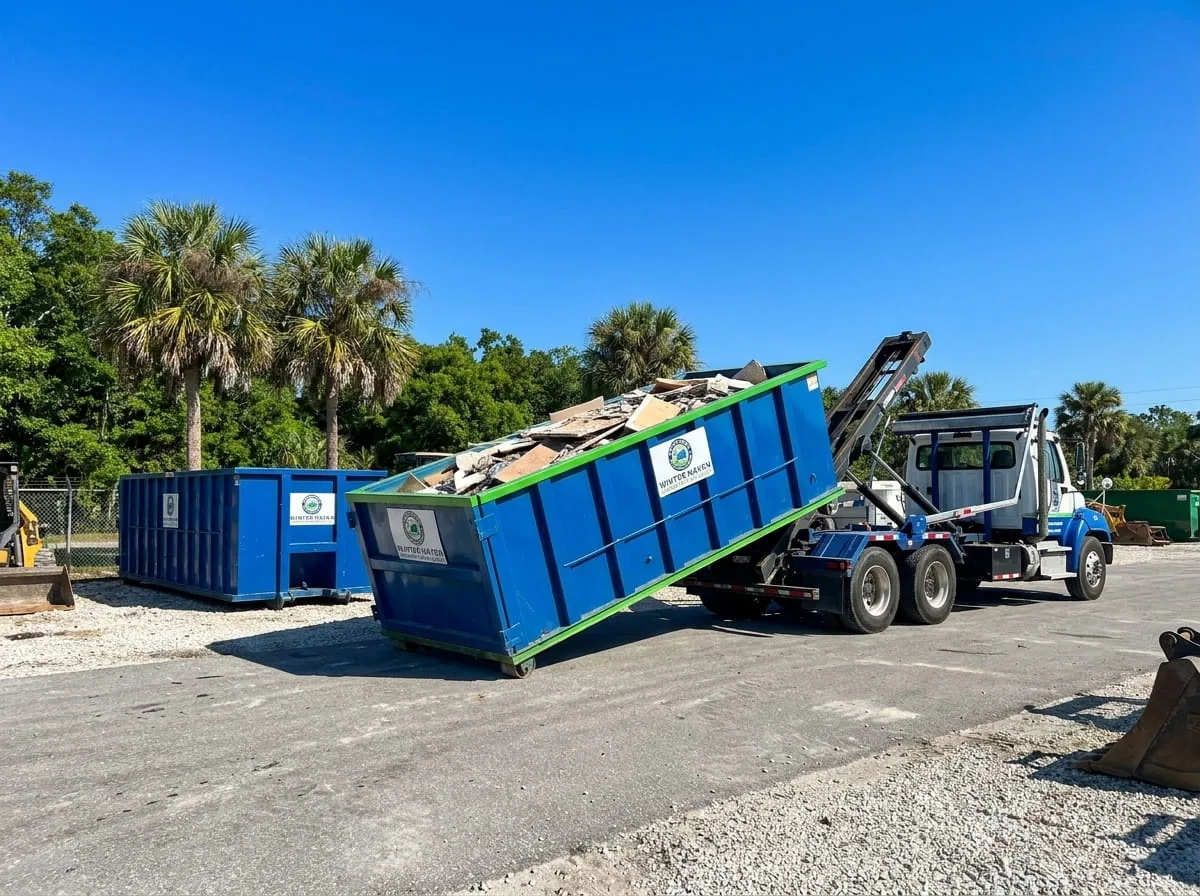
We plank under every container as standard to spread the weight, and on soft lakefront ground that matters more than anywhere. Sometimes the right answer is a smaller container that the ground will carry, placed on the firm driveway rather than out toward the water. A photo of the intended spot, taken from the street, lets us judge before we dispatch.
Dock, seawall and treated lumber
Lakefront tear-outs produce materials an inland job does not. Old docks, seawall timbers, boat lifts and lakeside decking - much of it pressure-treated lumber, which stands up to the Florida water and weather.
Pressure-treated lumber is accepted at the county landfill as construction debris, so it can go in the container. But it should be kept out of any clean-wood load, because it is chemically treated. On a dock or deck tear-out we will help you keep the streams straight - treated lumber with the general debris, not mixed with anything destined for a clean-wood route.
Boathouse and shed cleanouts
Lakefront properties tend to accumulate. Boathouses, sheds and garages fill with boat gear, fishing equipment, old dock hardware, watersports kit and decades of lakeside living. An estate or moving cleanout on a lakefront home often has considerably more to clear than the house itself suggests.
For these we would rather come and look than guess over the phone, because the volume in the outbuildings is easy to underestimate. Larger lakefront lots usually make placement easier, and we can often stage more than one container.
Protecting the water and the shoreline
Working near the lakes carries a responsibility to keep debris out of the water. The Chain of Lakes is environmentally important - it forms the headwaters of the Peace River - and there are ongoing projects to protect its water quality.
Practically, that means positioning the container so debris cannot wash or blow into the water, keeping the loading area back from the shoreline, and tarping every load - which we do as standard and Florida law requires. On a lakefront job we will think about wind and slope when we place the container, not just access.
Sizing a lakefront job
Sizing follows the same rules as anywhere - material, not just volume - but the site constraints weigh more heavily. The soft ground may cap the container size, and the access may be tighter than a photo suggests.
For a lakefront renovation, a 15 or 20 yard on the driveway is common. For a dock or deck tear-out, weight matters - treated lumber is not light. For a full lakefront estate cleanout including the outbuildings, a 30 yard, sometimes staged. Tell us the property and we will size for both the material and the ground.
The local advantage
Placing a container safely on a soft lakefront lot, keeping the streams straight on a dock tear-out, protecting the water, and reading which spots the truck can actually reach - this is local knowledge built from working the Chain of Lakes every week. A company that knows Winter Haven's lakes handles a lakefront job differently, and better, than one that does not. Tell us what you are working on and where, and we will plan it around the water.
Book a container in Winter Haven
One flat rate covering delivery, seven days, pickup and disposal.
(863) 656-0984Questions readers ask about this
Can you place a dumpster on a lakefront property?
Yes, and it's common work here - but the soft, sandy lakefront ground needs care. We plank every container to spread the weight, and sometimes recommend a smaller box or a driveway placement. A photo of the spot helps us judge before dispatch.
Can I put old dock and deck lumber in the container?
Yes. Pressure-treated lumber, common on Florida docks and decks, is accepted at the county landfill as construction debris. It should be kept out of any clean-wood load, though - we'll help you keep the streams straight.
What size do I need for a lakefront cleanout?
It depends on the job and the ground. A lakefront renovation often suits a 15 or 20 yard; a full estate cleanout with boathouse and sheds, a 30. The soft ground may cap the size, so we plan for both material and access.
How do you keep debris out of the lake?
We position the container back from the shoreline, think about wind and slope when placing it, keep the loading area away from the water, and tarp every load - which Florida law requires and protects the Chain of Lakes.